
Neurobiology, neuroplasticity & neurorehabilitation - from theory to practice
This course is a part of
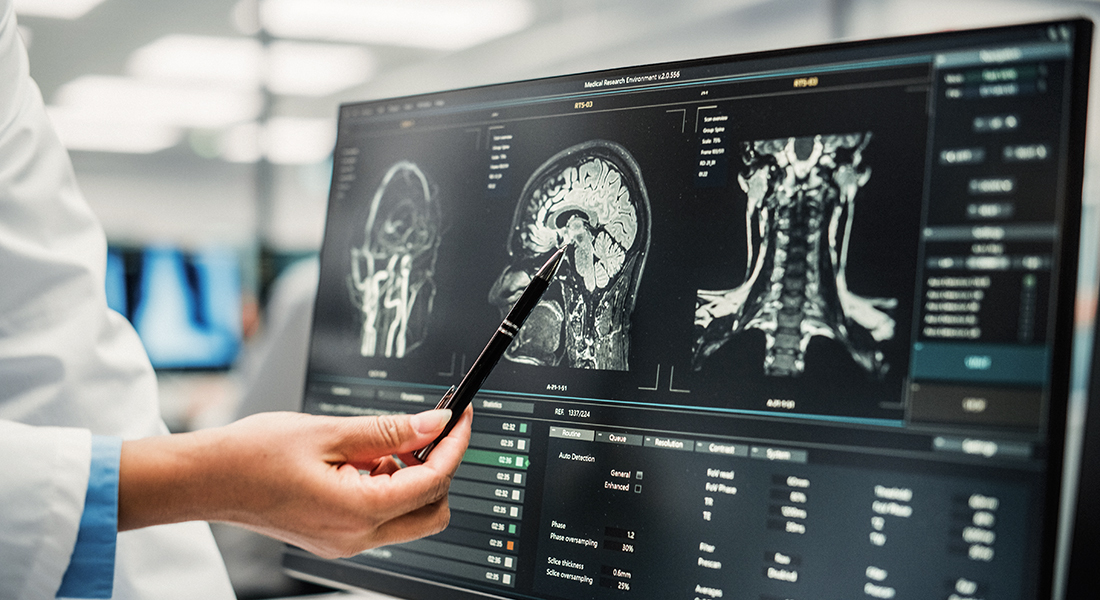
This online course focuses on developing a deep understanding of the human nervous system as the foundation for neurorehabilitation.
Drawing on research from both humans and animals, students will explore the mechanisms behind changes in motor functions, sensory processing, executive functions, learning, memory, sleep, and language.
The nervous system will be examined at both cellular and integrative levels, with emphasis on its relevance to neurorehabilitation. The course also highlights contemporary research methods and techniques, particularly their role in improving neurorehabilitation assessment.
A key focus is the transition from scientific knowledge to practical applications, ensuring students understand the neurobiological basis of rehabilitation and how it can be applied effectively in practice.
Course directors on »Neurobiology, neuroplasticity & neurorehabilitation - from theory to practice«
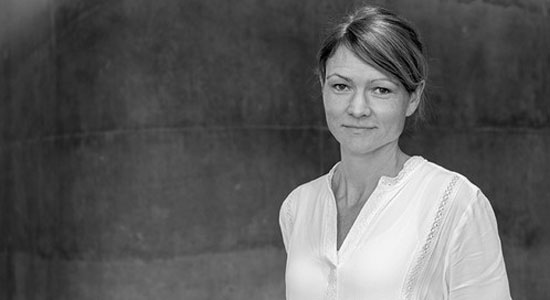
Lisbeth Højkjær Larsen
Post.doc, PhD, cand.scient.humanfysiolog
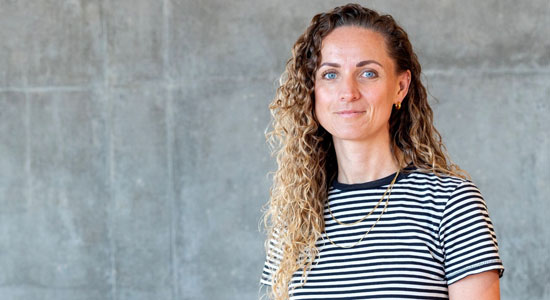
Helle Marie Hüche Larsen
Post.doc, PhD, physiotherapist
Learning outcomes for »Neurobiology, neuroplasticity & neurorehabilitation - from theory to practice«
Course details for »Neurobiology, neuroplasticity & neurorehabilitation - from theory to practice«
Schedule and delivery
This course is held online with no physical attendance.
Course dates
Teaching dates spring 2027:
7 and 8 January 2027 – online from 13-17
14, 21, and 28 January – online from 13-15
4, 11, and 25 February – online from 13-15
No teaching on 18 February due to the Danish winter break
4, 11, and 18 March – online from 13-15
No teaching on 25 March due to public holiday in Denmark
1, 8, 15, 22, and 29 April – online from 13-15
No teaching on 6 May due to public holiday in Denmark
13, 20, and 27 May – online from 13-15
3 June – online from 13-16
All times are Copenhagen time / CET.
Module overview
Module 1 – Foundations of Neurorehabilitation
This module introduces core terminology and fundamental principles of neuroplasticity, focusing on how the nervous system adapts and changes. It outlines mechanisms of learning and memory, including how motor skills are (re)acquired. In addition, the module highlights the essential importance of integrating rehabilitation into everyday life to support lasting change and promote independence in activities of daily living.
- Terminology & Introduction: Building a Shared Language
- The ever-changing nervous system: Adaptation and maladaptation
- Learning & Memory: Foundations for Neuroplastic Change
- Skill Acquisition & Procedural Memory: How Motor Skills Are (Re)learned
- Rehabilitation as 24/7 interventions: Integrating training and therapy in everyday activities
Module 2 – Sensation and Perception
Building on foundational concepts of neuroplasticity and learning, this module focuses on sensory processing as a basis for perception, motor control, and rehabilitation. This module examines how sensory information—focusing on touch, proprioception, pain, and vision— is processed and transformed into perception. It addresses the physiological foundations of these systems, common impairments, and approaches to rehabilitation targeting sensory and perceptual disturbances.
- Touch & Proprioception: Sensory Foundations for Motor Control
- Pain: Mechanisms, Modulation, and Clinical Rehabilitation Approaches
- The Visual Brain: Visual Processing, Impairments, and Rehabilitation Strategies
Module 3 – The Integrative Sensory-Motor System
Extending the examination of sensory processing, this module explores how sensory‑motor integration provides the foundation for both voluntary and involuntary movements. It covers mechanisms underlying disordered movement, plasticity after injury or immobilization, compensatory strategies, structural adaptations in the nervous system, and computational models that explain movement, learning, and recovery.
- The Integrative Sensory‑Motor System: Neural Control of Voluntary Movement
- Disordered Control: Neural Mechanisms of Involuntary Movement
- Plasticity & Compensation: Motor Adaptation in an Altered Nervous System
- Beyond the Lesion: Structural Adaptations to Immobilization and Non-Use
- Reconstructing Function: Plasticity and Learning in the Injured Nervous System
- Computational Neuroscience: Theoretical models on Movement and Recovery
Module 4 – Cognition, Emotion, and Communication
Extending beyond movement and sensory‑motor integration, this module focuses on the mental processes that shape human behavior. It covers theoretical frameworks and neural systems underlying cognitive functions, communication, emotional and motivational processing, and executive functions that support complex control processes underlying goal‑directed behavior. Emphasis is placed on treatment, rehabilitation, and functional recovery of cognitive and emotional disorders in daily life.
- Attention: The Selection and Processing of Stimuli
- Communicating with the World: Foundations of Speech, Language, and Communication
- The Emotional Brain: Neural Systems, Emotional Processing, and Clinical Disorders
- Executive Functions: The Basis for Goal-Directed Behavior
Module 5 – Time‑Dependent Plasticity and Lifespan Perspectives
Bringing together the content of the preceding modules, this module explores neural plasticity from a time-dependent and lifespan perspective, considering both the influence of daily experiences and long‑term changes across development and aging. It also addresses long-term engagement and motivational factors in rehabilitation, and the role of emerging technologies in supporting personalized therapeutic approaches.
- Daily Dynamics of Plasticity: Sleep, Wakefulness, Exercise, and Rest
- Plasticity Across the Lifespan I: Developmental Foundations and Early Intervention
- Plasticity Across the Lifespan II: Aging, Adaptation, and Maintaining Learning Capacity
- Setting Meaningful Goals in Rehabilitation: Supporting Engagement and Adherence
- Technology in Rehabilitation: Towards a Personalized, Data‑Driven Future
Admission requirements
You must meet the following criteria to be admitted to the course:
- Hold a relevant bachelor degree or equivalent.
- Have a minimum 2 years of relevant job experience.
- Have a standard of English equivalent to level B in Danish secondary education.
Find detailed information in the admission criteria on Master of Neurorehabilitation (website in Danish).
You can document your English language proficiency in one of the following ways:
Native English language
Native English speakers from the USA, Canada, Australia, New Zealand, UK or Ireland may submit a copy of the page of their passport that has their photograph as proof.
Diploma from a Nordic university
Nordic applicants can demonstrate their English proficiency by submitting a certified copy of a high school diploma proving that they have passed English level B or by submitting a certified copy of a bachelor's or master’s diploma from a Nordic university.
Degree from an English speaking country
Applicants who have earned a bachelor’s or master’s degree from the USA, Canada, Australia, New Zealand, UK or Ireland can demonstrate their English proficiency by submitting a certified copy of their degree certificate if their degree was taught in English. A semester or year spent on a student exchange programme is not sufficient.
English working language
Applicants working in companies with English as the official working language can demonstrate their English proficiency by submitting a letter from their employer, on official headed paper, stating that their working language is English.
English language proficiency test
Applicants can demonstrate their English proficiency if they have passed a recognised English language proficiency test with an adequate score. We accept the following tests:
Tuition fees
Master student
30,000 DKK
Single course student
EU/EEA citizens: 34,000 DKK
Non-EU/EEA citizens: 46,000 DKK
More information
All course information is available in the course curriculum:Location
Faculty of Health and Medical Sciences
Department of Copenhagen
Blegdamsvej 3B
DK-2200 Copenhagen
Lisbeth Højkjær Larsen
Course Director, Post.doc, ph.d., cand.scient.humanfysiolog
Lisbeth holds a degree in Human Physiology and earned a PhD in Health Sciences from the University of Copenhagen in 2018. She is employed as a researcher at the Department of Neuroscience at the University of Copenhagen and at the Center for Cerebral Palsy Youth Clinic at Rigshospitalet.
Since 2011, Lisbeth has conducted research onbeen researching motor learning and function in individuals with and without brain injuries. She has a particular interest in the use of technological solutions and most recently held a postdoctoral position at Zealand University Hospital, where her focus was on investigating the health-promoting effects of wearable devices.
At the Department of Neuroscience, Lisbeth has been involved in developing Course 2 of the Master’s programme in Neurorehabilitation and has been one of the driving forces behind the publication of the book ”Neuroplasticity-based Neurorehabilitation.”
At the Youth Center for Cerebral Palsy Youth Clinic, Lisbeth has helped establish a research database to highlight the challenges faced by young people with Cerebral Palsy during the transition from childhood to adulthood. At the clinicenter, Lisbeth contributes by developing and implementing projects that apply fundamental neurobiological knowledge in clinical practice to optimise the effectiveness of interventions.
Helle Marie Hüche Larsen
Post.doc, PhD, physiotherapist
Helle qualified as a physiotherapist from University College Copenhagen in 2013. She completed a Master of Science (MSc) in Health Sciences at the University of Copenhagen in 2019, and earned a PhD from the University of Copenhagen in 2024.
Helle is currently employed as a postdoctoral researcher at the Department of Neuroscience, University of Copenhagen.
She has experience in both clinical practice and research, and has worked with children and adults facing a wide range of neurological challenges. In addition, she has taught on both master's degree programmes and professional master’s programmes, and has supervised a variety of academic projects.
Helle has a special interest in the interaction between basic neurological mechanisms, clinical neurology, and rehabilitation. Her work has primarily focused on optimising motor learning as well as cortical control of visually guided movements in people with neurodevelopmental disorders.